Case Study
Magnetic Particle Imaging: From Tiny Magnets to Smarter Scans


Author



Dr Tram Nguyen
Keywords
inverse problems
image analysis
mathematical modelling
Overview
How MPI works
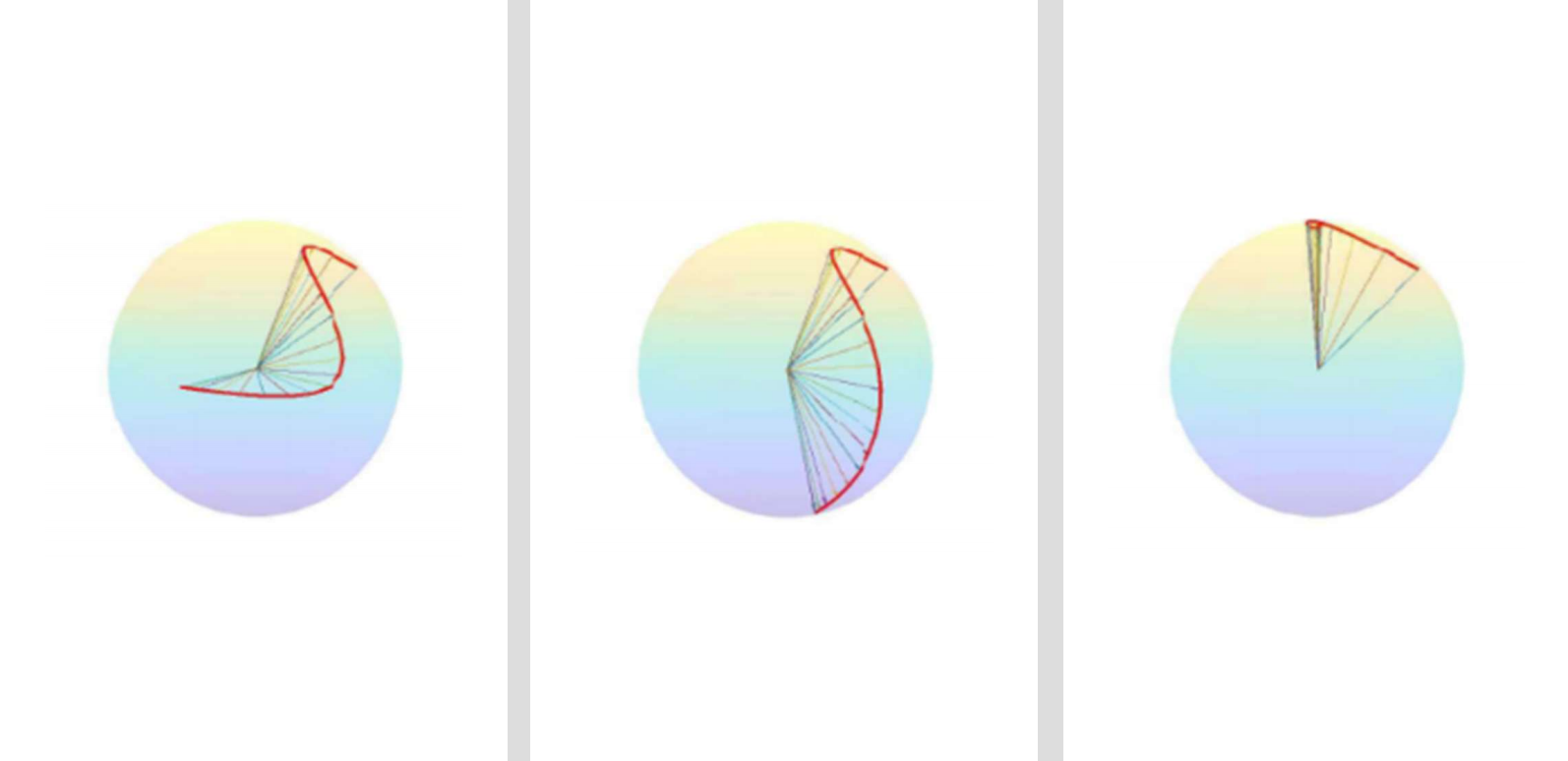
In MPI, specially designed iron oxide nanoparticles are injected into the blood stream. These particles behave like tiny magnets that respond to externally applied magnetic fields. The scanner generates two magnetic fields: The selection field, which creates a so-called field-free point (FFP) where the magnetic field is essentially zero, and a drive field, which rapidly moves the FFP throughout the region of interest. As the FFP moves through the body, the changing magnetisation of particles near the FFP induces a voltage in the receiver coils. By measuring the induced signal, one can reconstruct an image of the particle concentration, letting us map out the blood vessels.
The project
Combining micromagnetic modelling and inverse problems to improve imaging
The imaging process deals with the measured voltage, which depends on the particle concentration and a time-dependent system function. Importantly, this system function encodes both the scanner geometry and the dynamic response of the particles. Traditionally, obtaining system functions has to be done using extremely time-consuming manual calibration, measuring the response at each point. While alternative approaches already exist, these typically rely on simplified models and can miss important dynamical effects, such as relaxation delays, adversely affecting the accuracy and


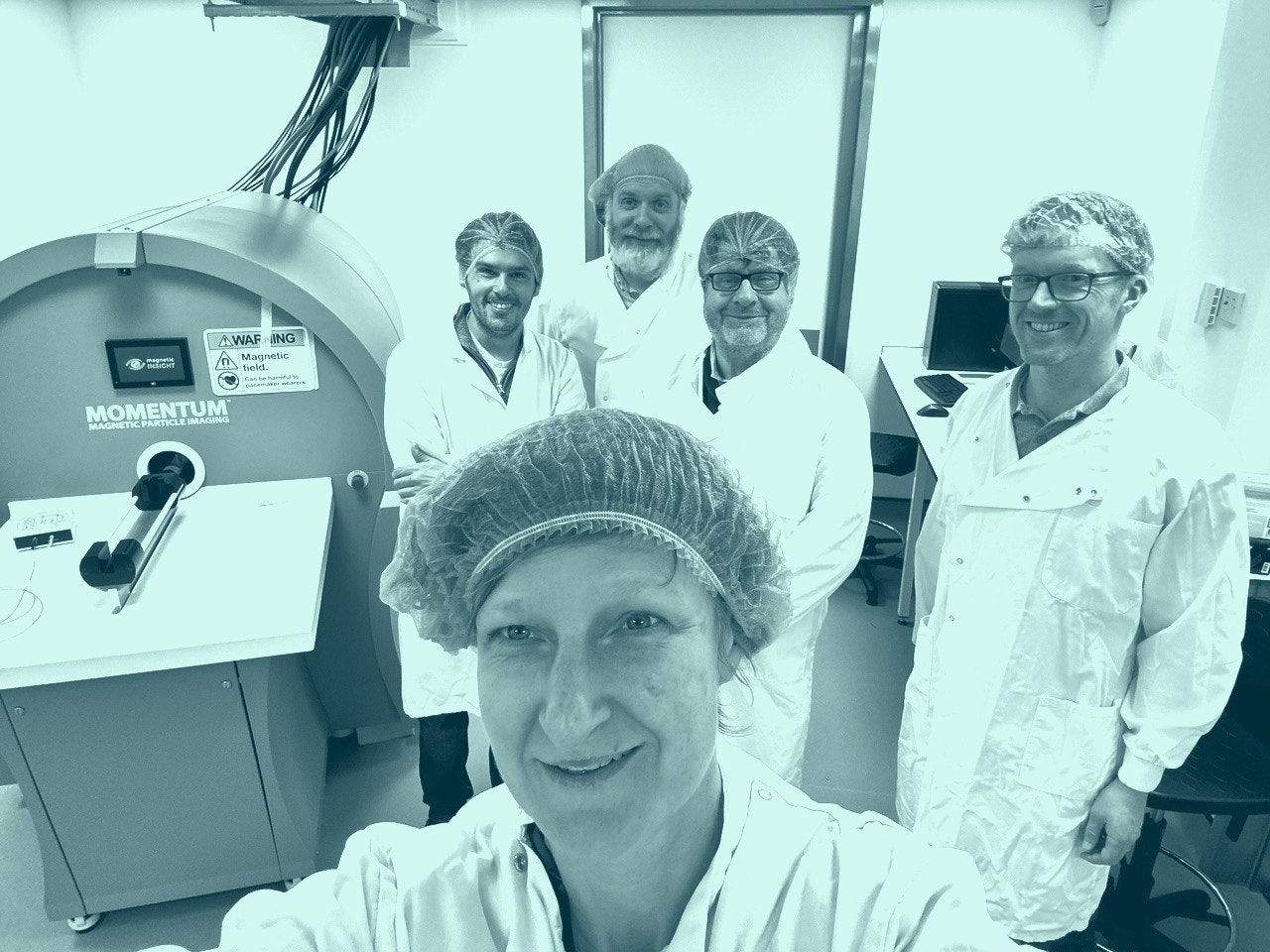
MPI scanner at the university of Liverpool
To tackle this calibration challenge, mathematicians at CHIMiRA teamed up with researchers in Germany and Austria. By combining micromagnetic modelling with rigorous inverse problem analysis and efficient algorithms, we have strengthened a critical link in the MPI chain: the step from transforming raw signals into trustworthy medical insights. Better calibration and modelling gives us confidence in the imaging process and provides physicians with easy access to high-quality visualisations of blood flow and other bodily functions – a significant step toward safer, faster, and more targeted diagnosis and treatment.
Find Out More
Parameter identification in Magnetic Particle Imaging
Read our analysisThe analysis yields a deeper understanding of magnetization of a magnetic material in response to an external field in MPI.
Numerical aspect of Magnetic Particle Imaging
Read our algorithmWe address the data-driven modeling of the system function in MPI, a starting point for the development of robust imaging algorithms.
Keep Reading
View all case studiesSee maths in action








Connect with us
Explore how CHIMiRA can transform your research or business challenges through mathematical innovation. We are an open house for ideas and consider projects from any academic discipline, business, industry or the third sector.
Contact us